TOPICS
トピックス
京都先端科学大学附属中高のグローバルシミュレーションゲームに参加しました
学び・授業
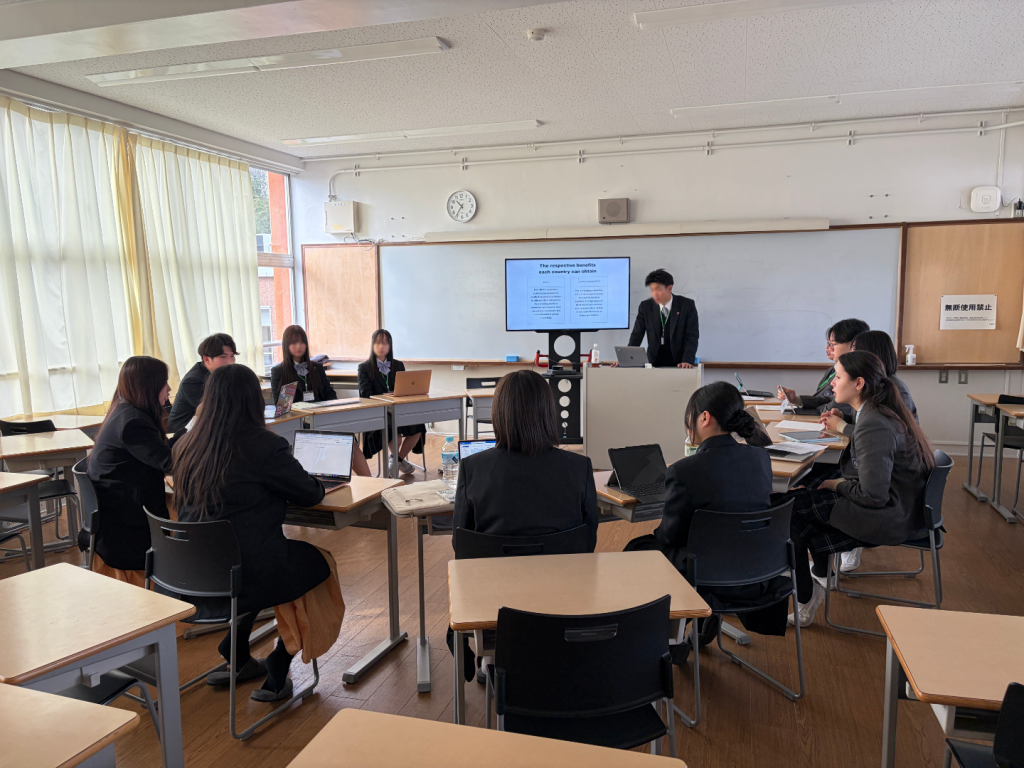
本校の生徒が 京都先端科学大学附属中学高等学校(KUAS) にて実施された「グローバルシミュレーションゲーム(Global Simulation Gaming)」に参加しました。
本プログラムは、世界が直面する課題をテーマに、各国や国際機関の立場に立って議論・交渉を行う、すべて英語で実施される高度なシミュレーション型学習です。
今回は引率したネイティブ教員より、当日の様子や生徒たちの取り組みについて、現地での視点から報告が寄せられましたので、ご紹介します。
Global Simulation Gaming at Kyoto University of Advanced Science Junior & Senior High School
京都先端科学大学中高におけるグローバルシミュレーションゲーム
Event Overview
This year’s theme was “Global Health in an Age of Uncertainty — Preparing for the Next Pandemic.”
The event was a simulation program in which students participated as representatives of specific countries or international organizations, discussing and negotiating international cooperation and policymaking to prepare for future pandemics. As GSG is conducted entirely in English, all discussions, negotiations, and document drafting were carried out in English. The program therefore required not only advanced English proficiency, but also a solid understanding of international affairs and public health.
イベント概要
今年のテーマは「不確実性の時代のグローバルヘルス ― 次なるパンデミックへの備え」でした。 本イベントは、学生が特定の国や国際機関の代表として参加し、将来のパンデミックに備えるための国際協力や政策立案について議論・交渉するシミュレーションプログラムでした。GSGはすべて英語で行われるため、議論、交渉、書類作成などはすべて英語で行われました。そのため、高度な英語力だけでなく、国際情勢や公衆衛生に関する確かな知識も求められました。
Event Flow
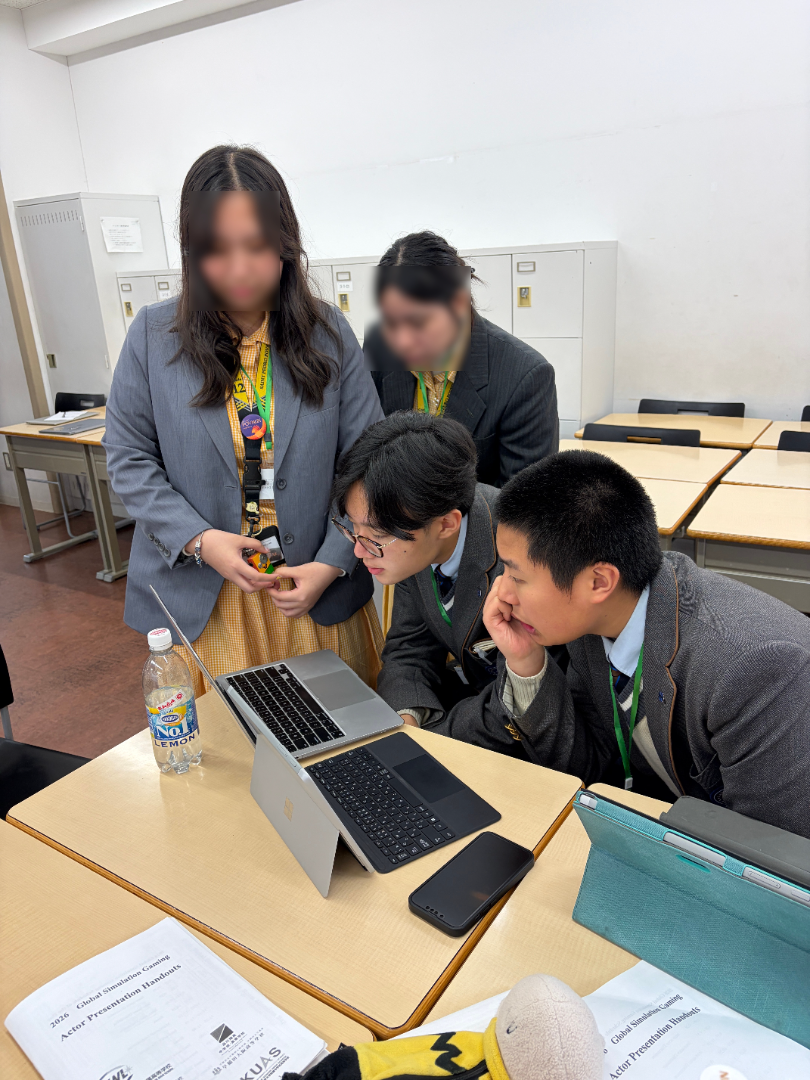
After arriving at the venue and completing the orientation, the simulation began immediately. Four students from our school participated as representatives of the Republic of Korea (South Korea), engaging in discussions with other countries and actors on a wide range of issues, including infectious disease control, vaccine distribution, strengthening healthcare systems, and approaches to international cooperation.
Within a limited time frame, the students actively worked on developing realistic and feasible policy proposals, as well as drafting treaties and agreement documents. Throughout the negotiation process, they considered differences in national positions and interests, sought points of compromise, and repeatedly engaged in discussion toward shared goals.
Subsequently, participants were divided into multiple international conference bodies, where they drafted and submitted resolutions aimed at strengthening preparedness for future pandemics. After lunch, a plenary session was held to conduct final policy adjustments based on the morning’s discussions. Following several hours of debate, a comprehensive international agreement was ultimately reached.
イベントの流れ
会場に到着し、オリエンテーションを終えると、すぐにシミュレーションプログラムが始まりました。本校からは4名の生徒が大韓民国(韓国)代表として参加し、感染症対策、ワクチンの配布、医療体制の強化、国際協力のあり方など、幅広い課題について他国・国の代表役の生徒たちと議論を行いました。 限られた時間の中で、生徒たちは現実的かつ実現可能な政策提言の作成、条約・協定文書の草案作成に積極的に取り組みました。交渉過程においては、各国の立場や利害の違いを考慮し、妥協点を探り、共通の目標に向けて議論を重ねました。 その後、参加者は複数の国際会議体に分かれ、将来のパンデミックへの備えを強化するための決議案を起草・提出しました。昼食後には全体会合が開催され、午前中の議論を踏まえた最終的な政策調整が行われました。数時間に及ぶ議論の末、最終的に包括的な国際合意が成立しました。
Student Engagement
The students from our school participated actively in discussions, speaking and negotiating in English without hesitation while clearly articulating their country’s position. From the preparation stage, they conducted thorough research on their assigned country’s healthcare system, past responses to infectious diseases, and its role in the international community. This preparation was clearly reflected in their statements and policy proposals during the event.
They also demonstrated flexibility by carefully listening to the opinions of other countries, making this a valuable opportunity to experience firsthand the importance of international cooperation. Through this experience, the students were able to significantly develop not only their English skills, but also their problem-solving abilities and global perspective.
生徒の積極的な参加
本校の生徒は、自国の立場を明確に伝えながら、英語での議論、発言、交渉に積極的に参加しました。準備段階から、担当国の医療制度、過去の感染症への対応、そして国際社会における役割について綿密な調査を行いました。こうした事前の準備は、議論や交渉中の発言や政策提言に明確に反映されていました。 また、他国の意見にも丁寧に耳を傾けるなど、柔軟な姿勢も示し、国際協力の重要性を身をもって体験する貴重な機会となりました。この経験を通して、生徒たちは英語力だけでなく、問題解決能力やグローバルな視点を大きく伸ばすことができました。